If there’s one thing years of working in web design teaches you, it’s this—trends don’t matter unless they improve results.
However, in 2026, website design trends are not just about looks. Instead, they focus more on performance, user experience, and conversions.
As a result, if your website still follows outdated patterns, you could be losing potential customers every day.
So, let’s explore the website design trends in 2026 that are actually driving real business results.
1. Personalization Is No Longer Optional
The shift toward minimal design is stronger than ever.
Instead of complex layouts, successful websites now focus on:
- Clear structure
- Easy readability
- Strong visual hierarchy
A clean design helps users find what they need without confusion.
2. Clean and Minimal UI Wins Every Time
The shift toward minimal design is stronger than ever.
Instead of complex layouts, successful websites now focus on:
- Clear structure
- Easy readability
- Strong visual hierarchy
A clean design helps users find what they need without confusion.
3. Micro-Interactions That Feel Natural
Small animations—when used correctly—make a big difference.
Things like:
- Button hover effects
- Smooth scrolling
- Subtle transitions
These elements improve user experience without overwhelming the design.
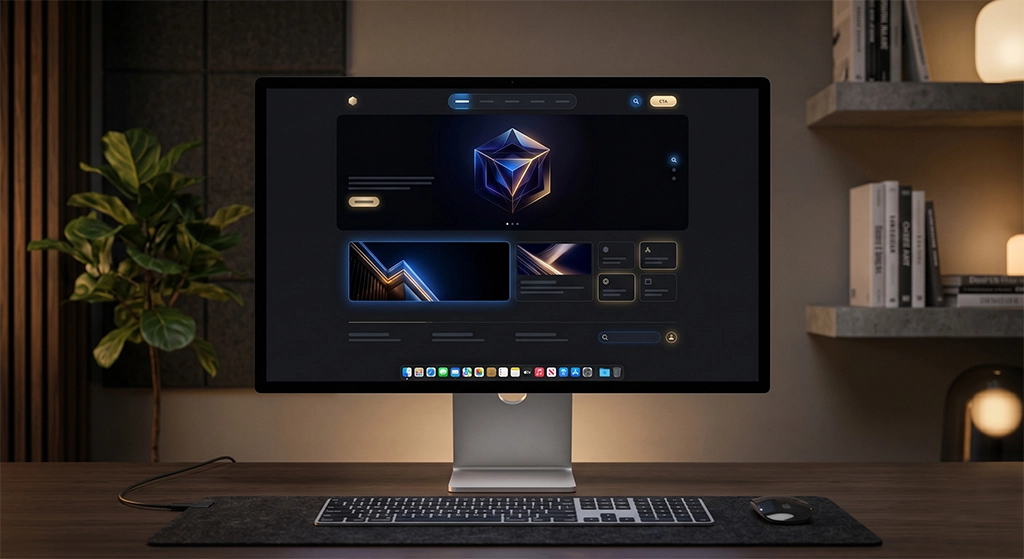
4. Smart Use of Dark Mode
Dark mode is no longer just a feature—it’s part of the design strategy.
When done right, it:
- Reduces eye strain
- Gives a premium feel
- Improves usability in low-light environments
5. Mobile-First and Thumb-Friendly Design
In 2026, designing for mobile is not enough—you need to design for how people actually use their phones.
That means:
- Easy thumb reach navigation
- Large tap-friendly buttons
- Simple layouts
This directly improves user experience and conversions.
6. Speed-Focused Design Approach
Today, speed is not just a technical factor. Instead, it has become a key part of design.
Because users expect fast-loading websites, even a small delay can increase bounce rates. Therefore, modern websites focus on lightweight design, optimized images, and better performance.
7. 3D Elements with Purpose
3D visuals are trending again, but with a more practical approach.
They are now used to:
- Highlight important sections
- Showcase products
- Add depth to design
But the key is balance—overuse can slow down the site.
8. Content-First Design Strategy
Design is no longer leading the process—content is.
Experienced teams now:
- Plan content first
- Structure information clearly
- Design around messaging
This ensures users understand your offering instantly.
9. Rise of No-Code and Low-Code Platforms
No-code tools are becoming more powerful and reliable.
They help businesses:
- Launch faster
- Update easily
- Reduce development costs
But the quality still depends on how well they are used.
10. Conversion-Focused Design
The biggest trend in 2026 is simple—design for results.
Every element on a website should guide users toward action:
- Clear call-to-actions
- Logical flow
- Trust-building sections
A website that converts will always outperform one that only looks good.
9. Disable Unnecessary Features
Turn off:
- Emojis
- Embeds
- Unused scripts
This reduces server load.
10. Test Your Website Speed
Conclusion
Overall, the website design trends in 2026 clearly focus on performance, simplicity, and user experience.
In other words, a modern website is not just about looks. Instead, it should help your business grow.
So, if you are planning to upgrade your website, explore W3Loop’s web design services to build a high-converting website.
FAQs
The most important website design trends in 2026 include personalization, mobile-first design, fast loading speed, minimal UI, and conversion-focused layouts. These trends focus on improving user experience and increasing engagement.
Website design trends directly impact SEO because they improve user experience, page speed, and engagement. A well-designed website reduces bounce rate and helps search engines rank your site higher.
Mobile-first design ensures your website works smoothly on smartphones, where most users browse today. It improves usability, loading speed, and overall user experience, leading to better conversions.
Dark mode is not mandatory, but it is highly recommended. It enhances user comfort, reduces eye strain, and gives a premium look to your website, especially for modern audiences.
 Post on LinkedIn
 Post on X